

On this page
Two years ago, "compliance" was a checkbox on most leasing software comparison sheets. Today it's one of the first questions operators ask.
In December 2025, Greystar, which the FTC described as the nation's largest multifamily rental property manager, agreed to pay $24 million, $23 million to the FTC and $1 million to the state of Colorado, to resolve charges that it misled renters about monthly rent by adding mandatory fees on top of advertised prices. Three months later, the FTC asked for public comment on a possible rule for rental housing fees.
Since then, many leasing platforms have started describing themselves as "compliant." Here's how to tell a platform built around fee transparency from one that added the word to its marketing page.

Caption: Six questions, mapped to where they show up in the renter journey.
1. Does it show the same total price, everywhere, every time?
Start here, because regulators have. Colorado's HB25-1090, in effect since January 1, 2026, requires the advertised price to include all mandatory fees, with narrow exceptions such as charges billed directly by a utility provider.
Under the Greystar order, when the company advertises base rent, it must disclose the total monthly leasing price more prominently and provide renters with fee details and the total monthly cost before collecting any payment.

The number a renter sees first should be the number on their lease.
Ask the vendor to show you where the total price appears in the renter journey: the listing, the application, the screen before any payment, and the lease. If any of those shows a different number, or the total only appears after the renter has paid an application fee, keep looking. (See Fee Transparency)
2. Is fee transparency built into the workflow, or added on top?
A platform that adds compliance on top tends to handle it with warnings, checklists, and staff training. A platform built around it makes the wrong path hard to take in the first place. Fees are structured data in a configured fee catalog, not free-text fields. Disclosures come from the same source as the price, and required acknowledgments happen in order, before anything is paid or signed.
Ask this question: "What stops a leasing agent from sending a renter a lease with a fee that wasn't disclosed upfront?" If the answer is "training," you have your answer.
3. Can it keep up with a patchwork of state and local rules?
There's no single national standard yet, and there may not be for a while. Meanwhile, the rules keep multiplying, and they don't all ask for the same thing:
- Massachusetts (940 CMR 38.00), in effect since September 2, 2025, requires the total price, including mandatory fees, to be disclosed whenever a price is shown.
- Illinois (HB 3564) requires mandatory fees to appear on the first page of the lease, for leases signed after January 1, 2027.
- Seattle's rental fee ordinance takes effect July 1, 2027. It bans certain fees outright and requires fees and the average total monthly cost to be disclosed in listings and applications.
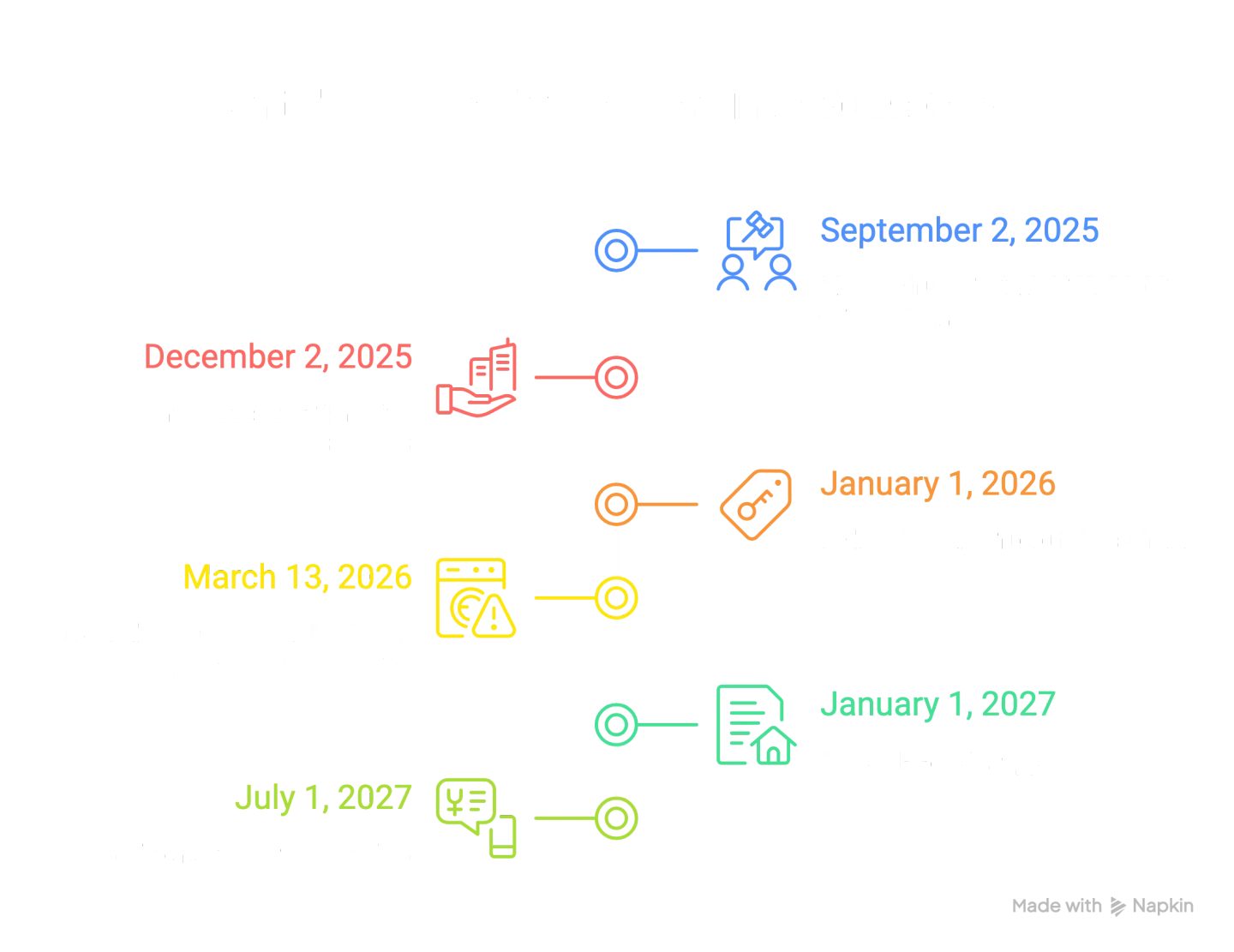
Different jurisdictions, different requirements, different dates. Track them by state on our Regulatory Tracking map.
For a portfolio that spans several jurisdictions, ask how the platform applies different rules by property. Then ask who updates those rules when a law changes, and how your team finds out.
4. Is screening consistent and documented?
Fee transparency gets the headlines, but inconsistent screening is where fair housing risk can build quietly. The same criteria should be applied the same way to every applicant, with a decision history that shows how each decision was reached and who approved any exception. Ask whether screening criteria are configured once per property and applied by the system, or interpreted case by case by staff. (See Screening & Identity)
5. Can you show what the renter saw, and when?
When a complaint, demand letter, or audit arrives, what you can show depends on what was documented at the time. A strong platform keeps a timestamped history of the disclosures presented, the fees acknowledged, and the documents signed. Ask the vendor to pull the complete audit trail for a single lease during the demo. It should take minutes, not a week of requests to different vendors. (See Audit Trail)

6. What happens at the handoff?
Most fee mismatches don't happen inside one tool. They happen between tools. If fee data is re-keyed when a lease moves into your property management system, every re-key is a chance for the disclosed number and the charged number to drift apart. Ask exactly how approved data moves to your PMS, and what gets checked along the way. (For more on where handoffs break, read Workflow Orchestration 101.)
Questions to bring to your next demo
- Where does the total monthly price appear, and is it the same from listing to lease?
- What prevents an undisclosed fee from reaching a signed lease?
- How are jurisdiction-specific rules applied by property, and who updates them?
- Are screening criteria configured once and applied the same way to every applicant?
- Can you show me a complete audit trail for one renter?
- How does data move to our PMS, and what happens if something doesn't match?
What good looks like
The operators who come out ahead won't be the ones who treat fee transparency as a cost to minimize. They'll be the ones who make it part of how they lease, so renters see one price from listing to lease and the team can show its work when someone asks. The right platform should make that the default, not the exception.